Handspun spinning slippers, the spinning of yarn therefor

I haven’t been doing much spinning this week, because…well, I cracked my whorl and it took me a week to get around to fixing it. For those who are wondering, the whorl is the grooved bit on the end of the flyer, which the drive band goes around. It’s the bit on the right end of the flyers here. For future reference, do not drop this thing on a tile floor, because if it lands the wrong way, it will crack and make you sad. Fortunately, they have invented wood glue and sandpaper, and hopefully I have managed to return the whorl to a usable state.

I do have something to write about, though: my first knitting project from my own handspun yarn. (Look! Actual knitting content! In the next post, that is.)

Right after I got Mustang Sally, my trusty Traveller, I went on a little shopping spree. It was the Tour de Fleece, you see, and I hadn’t a thing to spin. Well, I did have some rather nice wool to spin, courtesy of my mum, but it wasn’t new and shiny and I am never one to pass up an excuse for stash enhancement. The very first thing I bought was this rather lovely gradient-dyed mixed BFL braid from Wool Therapy:
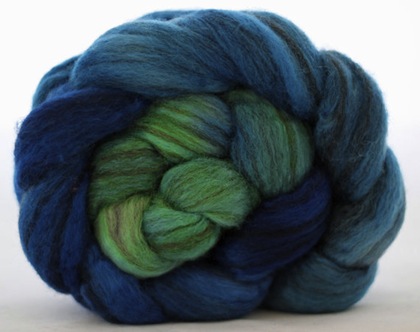
Isn't she lovely?

BFL (or, to give it its full name, Bluefaced Leicester) is a soft-ish wool that makes for some excellent socks. It would probably be perfect for mittens and sweaters, too, though I haven’t tried that yet. It’s no merino, for sure, but then it doesn’t have merino’s drawbacks, either: it wears well (as far as I can tell), tends to have some lustre to it, doesn’t felt if you look at it sideways, and though it fuzzes up a bit over time, it won’t pill the way merino does. It’s also very, very nice to spin, as I was about to find out. At 3.4 oz, the end project would have to be fairly small, so what about a pair of slippers to wear while spinning? Something like Reiko Arato’s Comfort Slippers — for Japan? Pretty, small, quick, and not only is the pattern a deal, it’s for a good cause. Plus, whenever I got discouraged while spinning, I could look down and see what all that work could become. Win.

I did some reading about spinning for socks, and decided on a 3-ply (for durability), worsted spun (also for durability, and because it was the only way I knew how to spin) heavy fingering to sport weight yarn. So for matching(ish) slippers I’d want six reasonably well-matched singles for two mini-skeins, one skein for each slipper. I split the roving in half lengthwise, then split each half into three, pre-drafting sections, coiling them up into bird’s nests, and lining them up so the colour flowed as it did in the braid. (This is where I perfected the lining-things-up technique mentioned in last week’s post, though I didn’t have a tray. It was also before I started this blog, so there are no photos of my stellar lining-things-up work, alas. You will have to use your imagination.) Then I started spinning. Here’s where the quality really showed: newbie though I was, I could easily spin this fibre into fine, even singles. It was such a pleasure to work with, I almost didn’t want it to end. That’s saying something — when it comes to spinning one fibre for any length of time, I have the attention span of a gnat on a caffeine jag. As I was spinning every day for the Tour, I had the first skein done in less than a week. Yeah, yeah, a week. Look: worsted spinning is the slowest spinning, and I was new, okay? Washing this yarn was straightforward: just a warm bath with a bit of wool wash, a couple of snaps between the hands to straighten the strands, and a night hung up to dry. Here’s the first skein:
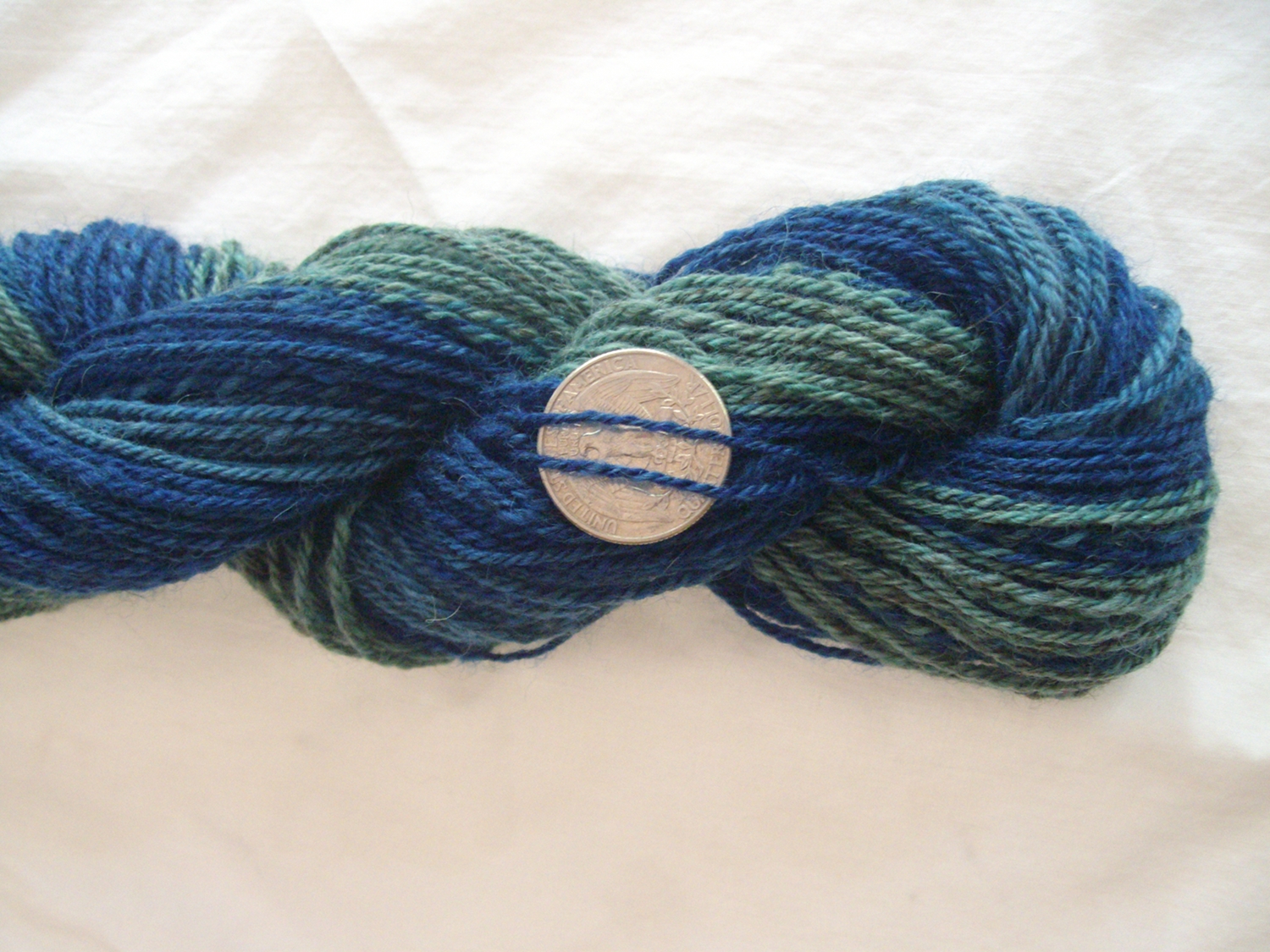
I still cannot believe I made this.

and the second, with some green 2-ply left over that I’ll use for colourwork at some point:
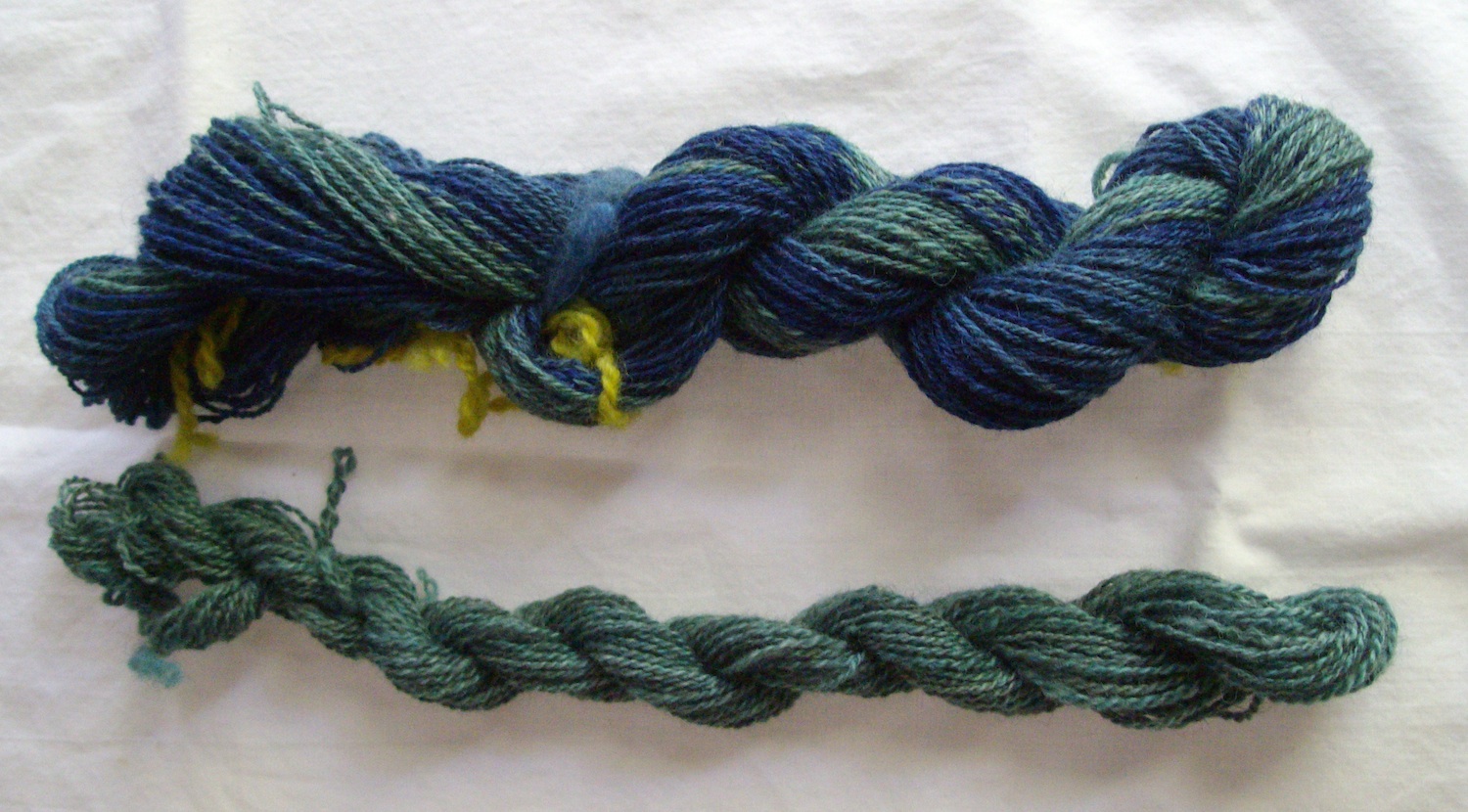
Always put vinegar in the first wash for hand dyed wool, kids. This is with; the first skein is without.

Oh, the blues and greens and fine, even loveliness. The yarn softened up nicely in the bath, too. I was as proud as a very proud thing, let me tell you. Next: the slippers themselves. Actual knitting content, I swear.
Fluffy yarn from unlikely fibre

A wise woman once described long draw as the funnest of draws. (Okay, it was me, last week, but I was feeling wise at the time.) My first time, it was almost like the yarn spun itself, but then I was spinning some Rideau Arcott wool that my mum had carded and given to me with the wheel. I had no idea how lucky I was. Now, if I could, I would have my mum living right next door so I could bribe her with knitting to prep all my spinning fibre for me. That lady knows her stuff.

The next time I tried long draw it was with some commercial roving, and admittedly it was not the ideal staple length for this technique, either — around 4-5″ rather than >3″. Suddenly it was the scariest of draws, and the hardest, and probably the cussiest. This rather sad attempt led to language that would make a sailor turn away and cross himself. It seems that the ideal fibre for long draw is stuff you’ve lovingly carded yourself (or, if you’re as lucky as I am, your sainted Mum has lovingly carded) and formed into neat rolags. Possibly on a tray, set within reach, beautifully lined up and awaiting your skilled fingers.

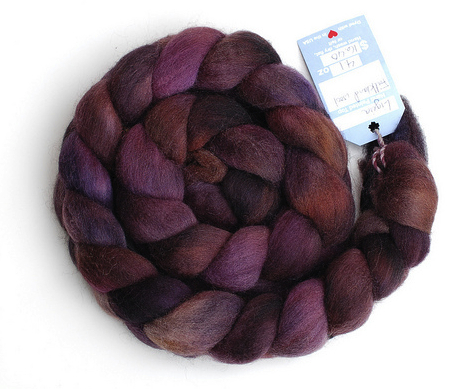
As it turns out, though, long draw or can be done with fibre that doesn’t meet this ideal. Thank goodness, because I haven’t yet fallen down the (undoubtedly wonderful) rabbit hole that is prepping your own fibre, and won’t until some hand cards magically appear in the house. Or until I buy them. Which may be soon. In the meantime, I’m stuck with commercial prep, which is mostly combed top: ideal for smooth, worsted yarns, not so great for woolen, at least for this n00b. For instance, I had this beautiful combed Falkland top from Cloudlover that I was sure wanted to be a fluffy worsted yarn.

Mmmm....purple... Photo by Karen Terry, from whose destash I scored this braid.

It’s top, though. Combed, not carded, with a staple length over 3″ (I think it was 4 or 5″). Exactly what you shouldn’t do long draw with, or so I thought. However, some spinning geniuses (genii? More than one genius.) have figured out how to spin this stuff woolen (which is what long draw does), and for that may flights of angels sing them lullabies on a nightly basis. This guy, for instance, has very kindly done a video on making and spinning fauxlags from combed top. Despite my impeccable lining-up-on-a-tray technique, my foray into fauxlags did not quite work out like this, though, so I’ve saved this video to try again later.

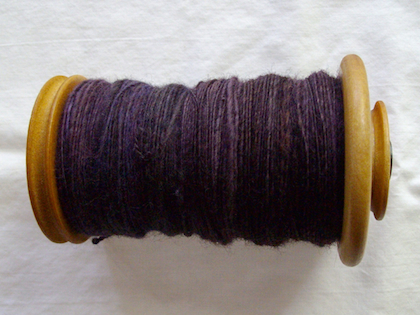
Then I came across the technique of spinning from the fold, where you take a staple length of a longer-stapled fibre, fold it over your finger, and spin from the middle. Lee Juvan wrote a good article about this technique for Knitty, in which she mentions that you can spin long draw from the fold. Abby Franquemont does an even more in-depth article here. I was intrigued. After some searching, I came across this Splindicity video. Genius! Not only did I learn how to do long draw from the fold, I learned that you can (gasp!) drop your fibre supply to fix slubs. If a bit gets too thin (which happens to me a lot), you can just break off there and rejoin your fibre. If you don’t like a bit of fibre (because it’s gotten too clumpy, for instance), you can throw it away rather than struggle with it. Above all, it worked for me. Long draw was fun again. Before I knew it, the first bobbin was full:

Not perfectly even, but acceptable, no?

The second bobbin filled just as quickly, and the whole thing plied up into 220 yds of somewhat fluffy, purply goodness.

Now here’s where we get to the second fun part of woolen style spinning: yarn abuse. Finishing woolen spun yarn is one of life’s rare opportunities to abuse the snot out of yarn for its own good. First, I got two basins of water ready, one scalding hot and one cold (or as cold as tap water gets in an Alabama summer, which is actually kind of tepid), both with a bit of wool wash in them. Donning the Rubber Gloves of Yarn Sadism, I plunged the skein into the hot bath and agitated. I poked it and prodded it and roughly swished it around in the hot, hot water in exactly the manner you never expected to do with wool. Then into the cold bath. More mistreatment. Then back into the hot. Then cold. Mwahahahahaha! I probably enjoyed this process more than was strictly decent. Then I squeezed out the excess water, wrapped the skein in a towel, and walked on it. Lastly, the thwacking: I opened the skein into a loop, snapped it between my hands to straighten out the strands, got a good hold on a section, and swung it full force into the bathroom counter. Rotate and repeat. And repeat. And repeat. It’s for the yarn’s own good, really. All this abuse opened up the yarn, making it bloom with that fluffy halo that distinguishes woolen spun yarn. Just look:

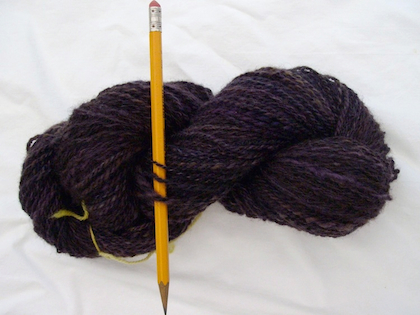
Finished! 206 yds/ 3.9 oz. Not perfect, but if I wanted mill spun yarn I could buy it.

If it helps, think of it as a particularly rigorous spa treatment. This is some soft, fluffy, Aran weight-ish yarn. I think it will feel wonderful around the neck on a cold day, maybe as Maryse Roudier’s Very Braidy Cowl.

Camel down: the stuff that dreams are made of

Lately, I’ve been doing a lot of what is probably semi-woolen spinning (like short draw, but with some twist in the drafting triangle). It’s not as slow as worsted, but it still seems to take foreeeeever, especially since I’m a spinning newbie and don’t draft very quickly. This skein of New Zealand Gotland lambswool 2-ply, for instance, took over a week:

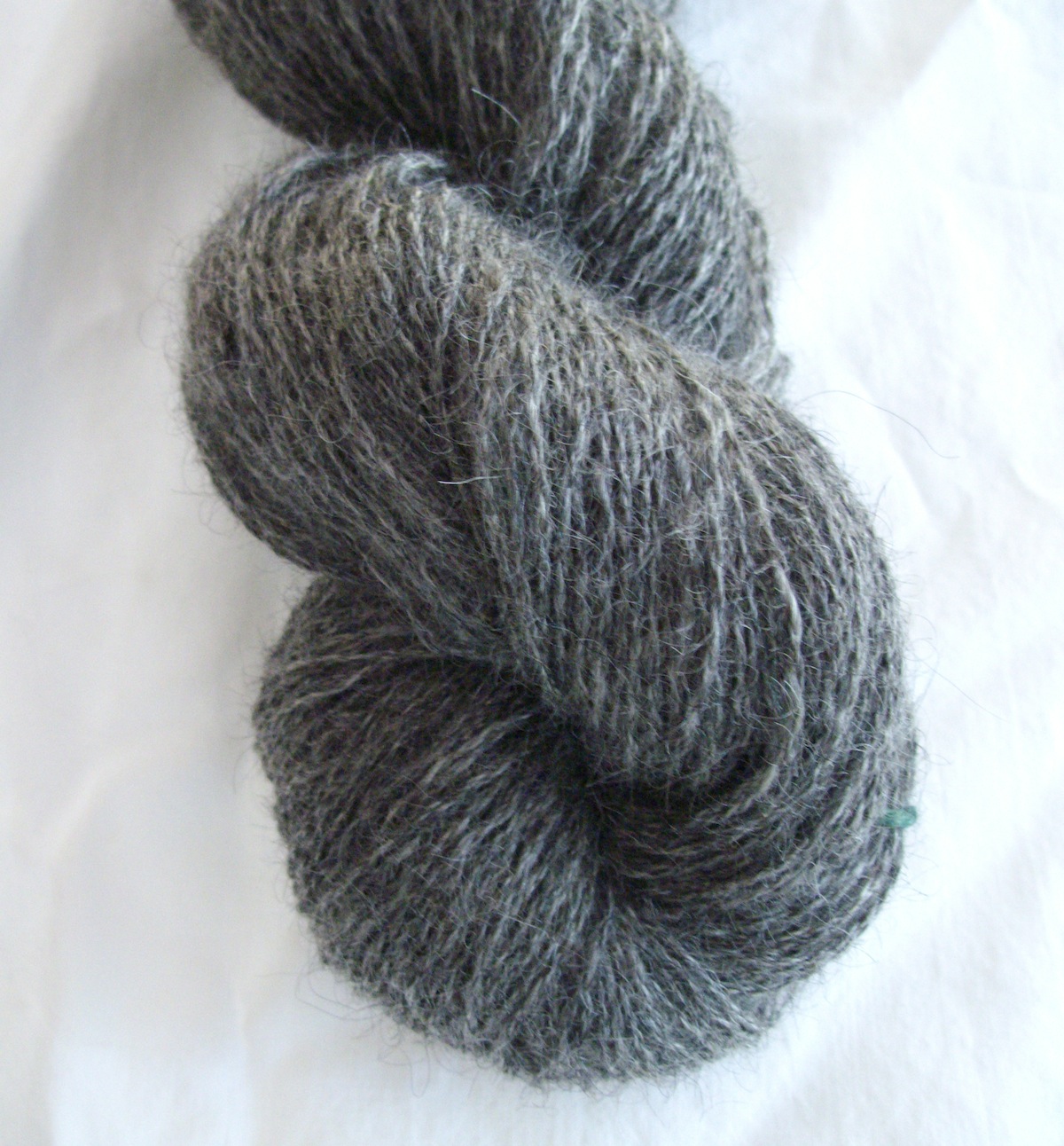
So pretty, if a bit prickly. 4.5 oz, 464 yds.

Don’t even talk to me about the BFL/Silk top. Hours and hours and days and weeks of spinning, and I’ve done about .7 oz. That’s just over half of the first single. Of three. It will make a very pretty pair of gloves, which I shall wear on outings from the old age home.

Then I saw this stuff. Clouds of baby camel down. Soft as a baby cashmere goat’s butt and less than 1/4 the price, prepped for spinning woolen. Hooray, long draw: so fast, so lofty, so much more fun. I’m not great at long draw, but I swear it is the funnest of draws, and compared to what I’ve been doing, the speed is like some kind of magical thing. (For those of you wondering what the hell I’m talking about, here’s a demonstration video, and here’s a more technical video by a decidedly non-stereotypical fibre geek.) I did some reading (mostly this article on camels and their fibre), decided I didn’t know enough to be afraid, and bought 12 oz.

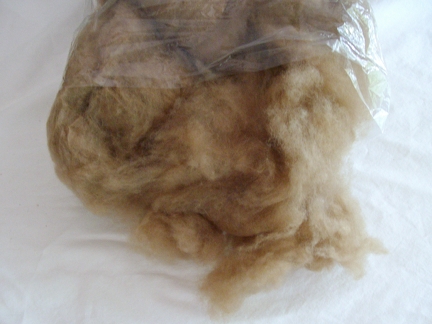
Well, let me tell you, baby camel down is exactly as soft as advertised. It’s unnerving to touch something so soft you almost can’t feel it. Even BitterOldPunk was impressed, and he’s given up any pretense of being interested in fibre. Here’s what it looks like:

Can I have a pillow of this? How about a bed?

I gleefully ripped the BFL/silk bobbin from Mustang Sally, fluffed out the clouds of down, and started spinning. The staple length on this stuff is very short — less than an inch — and it’s pretty slick, so I used the smallest whorl (8.5:1) for lots of twist and set the wheel up for double drive with almost no take-up. It still wanted to drift apart at first, but eventually I got the hang of it. At 8.5:1 I had to treadle several times after drafting to get enough twist in to keep the singles together; still, it went like the wind. Within an hour or so, I had enough for a test skein. Not the most even spinning that ever was spun, but feh, it’d do.

Three DPNs and a cardboard box: this kate is the laziest of kates.

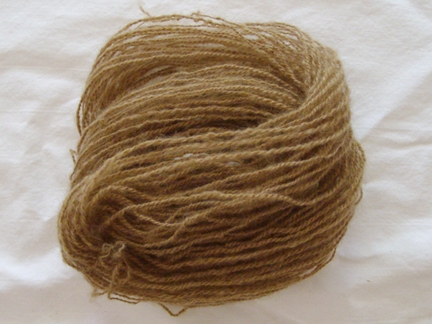
I let the singles rest overnight, and then plied them. All that twist? Yeah, still not enough. Well, there was enough in most places, but I could tell where I got bored with the holding and treadling and let the singles wind on too soon, as those bits snapped like a wet paper tightrope when I tried to ply them. (Note to self: yes, you will end up needing a high speed flyer.) I knotted them and moved on. It’s just a test skein, after all. Pre-wash, the yarn came to 62 yds in 10g. Fulled (alternating hot & cold baths with agitation), thwacked (um…thwacked. Against the sink. Beat like a rented mule. It’s a technical term.), dried, and reskeined, the finished yarn is 60 yds.

When will they invent Touch-o-Vision?

Did I mention I bought 12 oz? That’s about 340g. Even with some going to practice, I am going to have a lot of yarn. I think I can live with that. Maybe I’ll make pyjamas. And then never leave the house.

Basil!

Years ago, back in East Vancouver, I lived next to an Italian guy named Mario. Mario had a beautiful garden, in which he had built a sort of tent thing covered in thick, clear plastic sheeting. In this tent thing, he grew masses of the most wonderful Roma tomatoes and an embarrassment of shiny, healthy basil plants. Mario noticed my interest in gardening, and every year, he’d give me his extra tomato and basil seedlings. Every year, I would plant and nurture these seedlings, and every year, they would grow into sad, leggy plants. The tomatoes would get blossom end rot, and the basil would produce maybe ten usable leaves, and I would look over the fence at Mario’s tented jungle and feel that somehow I had let him down. Every fall, he would come over with a couple of grocery bags of tomatoes and a large bunch of basil and say, “It’s okay. They’ll be better next year.” They never were.

My first summer in Birmingham, I covered the deck in pots of herbs: everything that I’d had success with in the past (mint, chives, parsley, thyme) and a couple of basil plants, just for old time’s sake. The mint got some kind of infestation. The parsley bolted as soon as the summer hit (some time in May). The thyme did pretty well the first summer, but refused to come back. My mother-in-law’s cats kept eating the chives and then puking them up on the carpet. The basil, though. Oh, the basil: big, bushy plants with shiny green leaves, growing faster than we could eat it. After two summers of failure with my old stand-bys (I mean, how the hell can you kill mint? I ask you.), I took the hint and planted only basil. Pots and pots of basil. Today, I cut all the plants back to make this pesto, and this is what I got:

Holy crap, wouldya look at this basil?!?

Mario would be proud.

Happy stripes

Finally, the ungodly heat of the last several weeks has abated, and it’s possible to spend more than 2 minutes outside without expiring from heat prostration. I decided to celebrate the reprieve by going to a baseball game. The Birmingham Barons, our local AA team, were playing a home game against the Montgomery Biscuits; the ballpark is ten minutes away; the evening was warm and breezy; clearly, it was meant to be.

Obviously, I needed to decide on a knitting project to take to the park. It had to be easy (or how would I watch the game?) and portable. I looked at the eleventy works in progress and decided that none of them would do. The most urgent ones required charts and close attention, and the one simple project (the cardigan that never ends, about which I’m sure I’ll post later) had gotten pretty big, and required me to chain-ply a wingspan’s worth of laceweight at a time, which would mean BitterOldPunk would have to sit several feet away to avoid getting whacked in the face every five minutes. Alas, I would have to start a new project for the game. Cue hand to brow accompanied by dramatic sigh.

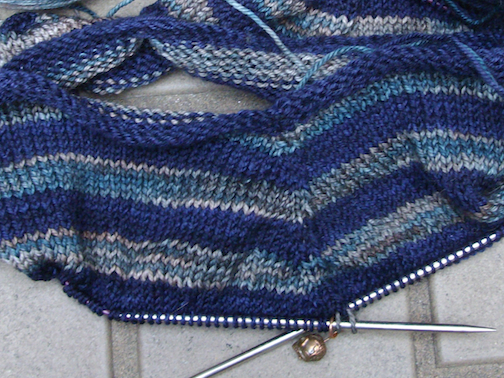
Fortunately, I had just the project. My nephew’s first birthday is coming up. He must have a sweater from his doting Auntie B. With the ludicrous amount of sock yarn in my stash, Hannah Fettig’s Sock Yarn Sweater was the clear winner: straight stockinette raglan, which I’ll do in 5-row stripes to keep it interesting (and keep track of rows without a counter). Simple, small, and on my list of Things I Must Make Soonish. I even had the yarn already: some lovely, soft Malabrigo Sock in Marine and Persia. Yep, this would be just the thing. I wouldn’t even bother swatching because hey, it’s a baby sweater: if it doesn’t fit now, it will eventually. If it’s too small, I’ll start again. I know this yarn, so don’t need to worry about it changing drastically when it’s washed.

Well, it was a good game, and I didn’t get much knitting done, though the attendance was…um…sparse:

Apparently, Tuesdays are Swing a Dead Cat Night.

Once I got started, though, I couldn’t put the damned thing down. The colours are playing so nicely together, and at five rows per stripe, it’s easy to get caught up in a just-one-more-stripe cycle. There are eleventy billion projects I should be working on, but I can’t. stop. making. stripes.

These stripes make me so happy.